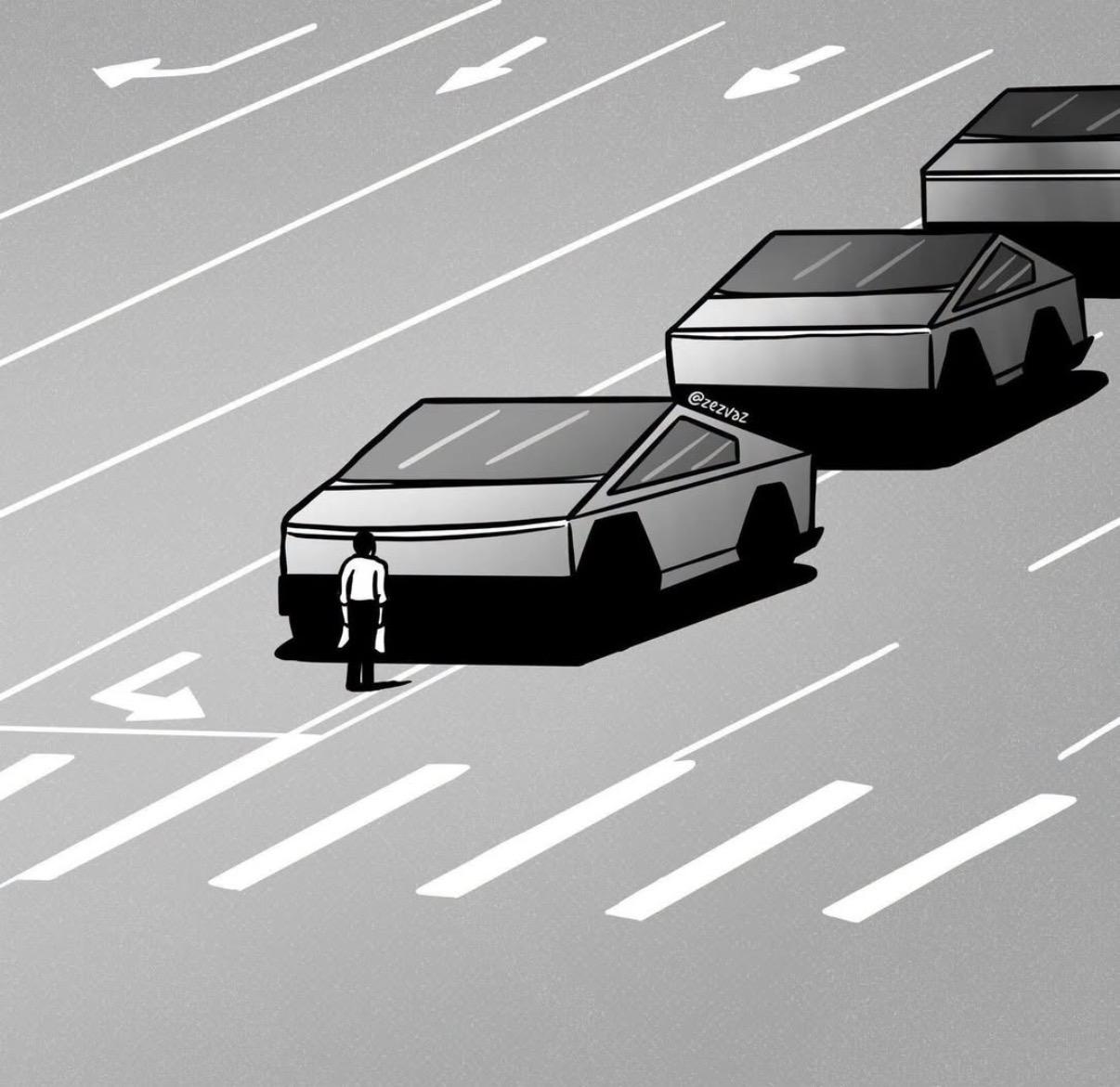
This all fits in with my airplane emergency metaphor: every disagreement over an issue that affects a lot of people is a power-struggle, not an attempt to solve a real problem.
Even the people who stand to benefit from the power-struggle may be so programmed into that mindset that they will ignore real danger, even when it's a danger to them.
It seems worth pointing out that sometimes science is the subject of these false allegiances. This is where we get fake institutions and fake journals which "scientifically prove" that climate change is a hoax, smoking is harmless, etc.
If "separate magesteria" is supposed to be a walled-city system intended to keep belief-communities safe, it's failing pretty much everyone.
I can even go so far as to imagine that they see this system -- each belief-system in its own walled city -- as having been created as a way for us all to get along, a way to prevent religious wars.
When we say that science should prevail, they see that not as elevating it above or outside that system but as using it like a wrecking-ball to knock down the walls of separation that keep each faith-state safe from the others.
...which is ridiculous, of course, since the faith-conquistadors don't give a damn about whose walls they break down, and often go out of their way to attack science first (while posing as allies of one or another faith-state).
@oli I'd been struggling to really get inside the head of someone who would swallow the idea that one person, or even one set of people, can just slap a word or phrase on some idea -- "woke!" "fake news!" "socialism!" -- and thereby make it untrue.
Like, have these people never heard of con-artists? If a used car salesman claimed that all the other dealers were "woke socialists" and this beat-up junker is "the greatest car ever made in history", would that seal the deal?
The cognitive landscape I'm laying out here feels like it explains things at least a little. They've been raised with an understanding of the world in which certain areas of reality are firmly walled-off as being a choice -- and when we challenge their beliefs about those areas, we're trying to break down those walls. We're threatening their safety, violating their rights.*
(Again, they're completely wrong and are being suckered into serving powermongers, but the patterns of thought they were raised with make it almost impossible for them to see that.)
* (Haggling over a business transaction is outside that wall, so they're allowed to apply critical thinking.)
It's not true, of course, but their faith-emperors told them to believe it -- so now believing it it is is part of their emotional safety-net.
Which is to say:
To them, "science" does not represent an overarching attempt to objectively understand reality; it's just another competing belief-system, another empire. When science says religion is wrong, it's getting above its station and needs to sit down.
Not that there aren't far more egregious privacy issues in tech (and Android, and Chrome), but that does seem like something that should change.
(...and we need to find ways to make it easier for victims to escape abusers, so this kind of fine technical point doesn't even become an issue, but that's a whole other discussion.)
A recent discussion with a right-winger has given me a possible insight to WTF is going on with them, but there's still some work to do towards laying out the evidence.
While it's still fresh-ish in my head, though:
We all understand that there are limits to what we can reasonably call "facts", because there's so much we don't know about the universe -- but people have an emotional need to cope with the non-factual parts of life, so they fill in the gaps with stories that help them feel safer and more in control.
Historically, people organized around these stories: if a lot of people believe the same thing, then it must be true, right? So being together with other people who have agreed that a certain set of stories is how things actually are is comforting, because it gives them reassurance that they're not just guessing.
Those groups of people become "religion", and the stories they believe become "doctrine".
(I think this must be the origin-story for "separate magesteria", which posits that some beliefs are testable, but others are not and never will be, and therefore can only legitimately be settled by doctrine rather than science -- even as the science shows otherwise.)
The problem with this system is that right-wing authoritarian followers seem to be all too willing to include whatever they don't understand as part of the doctrinal realm -- and once they have accepted something as part of that realm, it becomes an integral part of their emotional safety-net, i.e. the set of stories they need in order to deal with the unknown.
Right-wing powermongers -- maybe think of them as "faith-emperors" -- have learned to exploit this tendency. They see ignorance, uncertainty, and confusion as unconquered territory they can claim (in the name of whatever faith will have them) by creating new stories around it.
Those stories are, of necessity, completely counterfactual. Stories that correspond to the evidence are part of science, and accepting those stories would be ceding territory to an enemy power.
This is why they get upset when we try to show that their beliefs about reality are in fact testable, and that the evidence contradicts their doctrine.
When we say "what you are doing is harmful", they see us trying to destroy their faith because we're attacking their safety.
They see us as trying to invade territory that rightfully belongs to them.
...or something along those lines, anyway.
Okay. So the bug I see here is that there's no firewall between anonymous user data (not logged in) and what a logged-in user can access.
My take is that this is a bit less egregious as a code-design oversight than what I had previously understood, but still a pretty serious security issue.
One question that comes up for me:
If the user had understood that her browser was now logged into a cloud-based account, that should have tipped her off that something had changed.
What does Chrome do towards indicating to the user that they are logged in to a cloud account?
Okay. This explains it a bit more.
What I think I'm understanding is:
Do I have that right?
@EndlessMason @sagefault @evacide
As I said, I wasn't familiar with the ability to use Chrome without logging in. On my phone, you can't do anything much without logging in. I think you can turn the flashlight on and off, but that's about it.
...and the ability to use an app which manages sensitive user data without logging in is itself a pretty serious bug, in my view.
@EndlessMason @sagefault @evacide
I'm not sure what you mean. If there's no sync happening, then the problem doesn't occur.
@sagefault @EndlessMason @evacide
You can sign into Chrome without logging into your Android account, is what you're saying?
(I use Android but had never come across this... feature...)
(Failing that, a little O2me2 might be useful.)
@EndlessMason @chrisp @evacide
the article
@EndlessMason @chrisp @evacide
My understanding is that it is, in fact, synching info from the victim's account to the abuser's -- which shouldn't be possible without consent from the victim's side, which shouldn't be possible for the abuser to do without access to the victim's login credentials.
KDE lets me scroll vertically and horizontally with the touchpad. ^.^
See if you can find C300PPM. 🤖
@EndlessMason @chrisp @evacide
My understanding is that the browser's sync only works for events that happen after it is set up -- hence "from that moment on".
The sync was created before she browsed for help with her situation -- so those events were synched over.